
Understanding Self-Abandonment
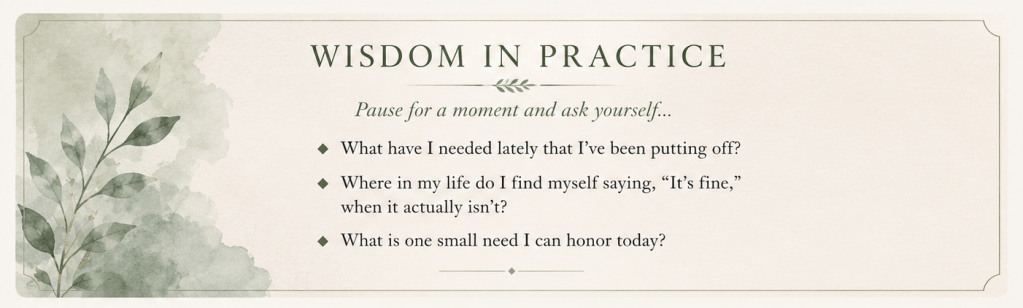
When was the last time you stopped and asked yourself, “What do I need?”
For many, this question feels surprisingly difficult to answer, if they are even asking themselves this at all. It may be easy to recognize what a partner, child, friend, or coworker needs. It may feel natural to offer support, solve problems, or make things easier for others. But when attention turns inward, there may be uncertainty. Or perhaps the feeling that turning this question inward is in some was selfish, you know, because so many others have it worse than us.
Somewhere along the way, many people learn to become highly skilled at listening to everyone else while becoming disconnected from their own needs.
This disconnection often happens slowly. It may look like constantly saying yes, ignoring exhaustion, minimizing feelings, or putting personal needs aside until “later.” Over time, this pattern can lead to feeling overwhelmed, resentful, burned out, or unsure of who you are outside of what you do for others.
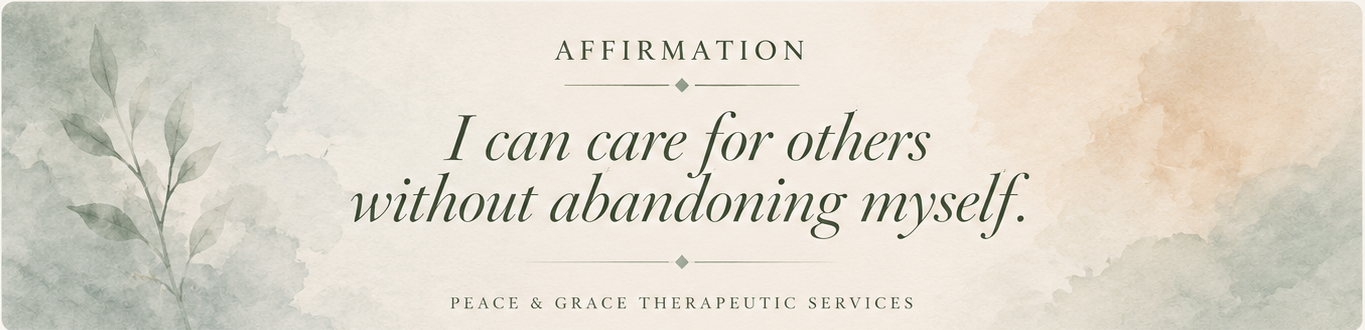
This is often referred to as self-abandonment.
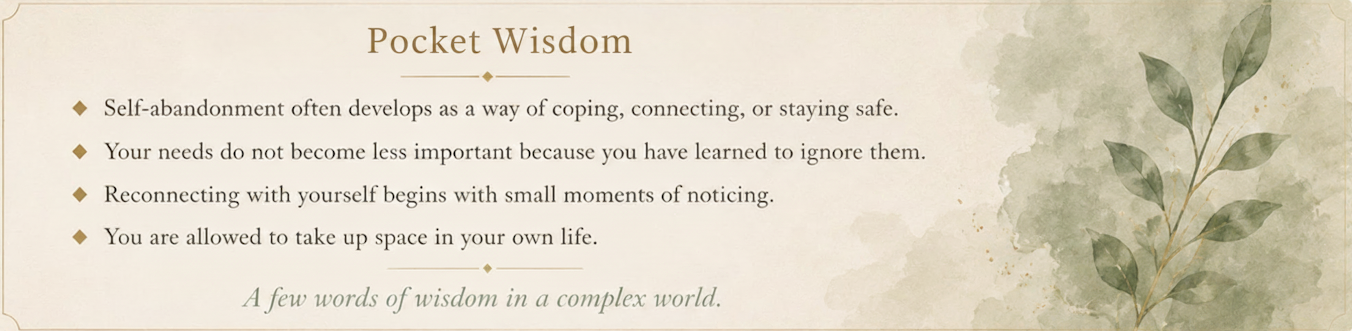
Self-abandonment occurs when we repeatedly ignore, dismiss, or override our own emotions, needs, values, or preferences. It does not mean someone is intentionally neglecting themselves. Often, these patterns develop as ways of coping, connecting, or staying safe.
Many people learn early that certain parts of themselves are more accepted than others. Perhaps being helpful brought praise. Being independent meant not burdening others. Staying calm helped maintain peace. Over time, these strategies can become automatic.
Attachment theory highlights how our early relationships can influence how we understand our own needs and whether we feel safe expressing them. If someone learns that their needs are inconvenient, too much, or likely to create conflict, they may begin to disconnect from those needs altogether.
Self-abandonment can also contribute to burnout. When we continuously give without checking in with ourselves, our internal resources become depleted. We may continue functioning on the outside while feeling disconnected on the inside.
Healing begins with rebuilding a relationship with yourself.
Thank you for taking the time to read my post. I’m just trying to offer a few words of wisdom in a complex world. If this resonated with you, I’d love for you to subscribe, leave a comment, or share it with someone who may need it too. Life can be hard—and you don’t have to navigate it alone. I’m here to help.
To learn more about the services I offer, visit:
Instagram- peaceandgracetherapeutic
TikTok-@peaceandgracetherapeutic
Peace & Grace Therapeutic Services LLC Facebook
LinkedIn- linkedin.com/in/jenniferbailey


Leave a Reply